Where To Start With John Rhode
He published over 140 novels. Which ones are actually good?
Dear listeners,
I wouldn't say that the work of John Rhode (one of several pen names used by writer and engineer Cecil Street) is a blind spot of mine, exactly. I'm very aware of how involved he was in the golden age of detective fiction: a founding member of the Detection Club, a collaborator with Dorothy L. Sayers on Have His Carcase, and a prolific novelist in his own right with multiple recurring detective characters. I just haven't explored his oeuvre nearly as much as some of that of his contemporaries, for one simple reason. It's enormous.
In his 80 years of life, Street published over 140 novels. Over 70 of them, those that appeared under the name of John Rhode, feature his main sleuthing character, Dr Lancelot Priestley. Then there are another 60 or so that were published as Miles Burton, about a retired naval officer named Desmond Merrion, as well other books published Cecil Waye. Until recently, when Street's work started coming out of copyright in the US and a few other titles attracted the attention of republishing imprints, the only way to read any of these books was by securing an often-pricey secondhand copy. I'm sure you see the difficulty. On the one hand, Street was a major golden age author and has fans who advocate for greater prominence for his mystery writing. On the other, trying him out was very difficult, without a major investment of time and money. And so, largely, I didn't bother.
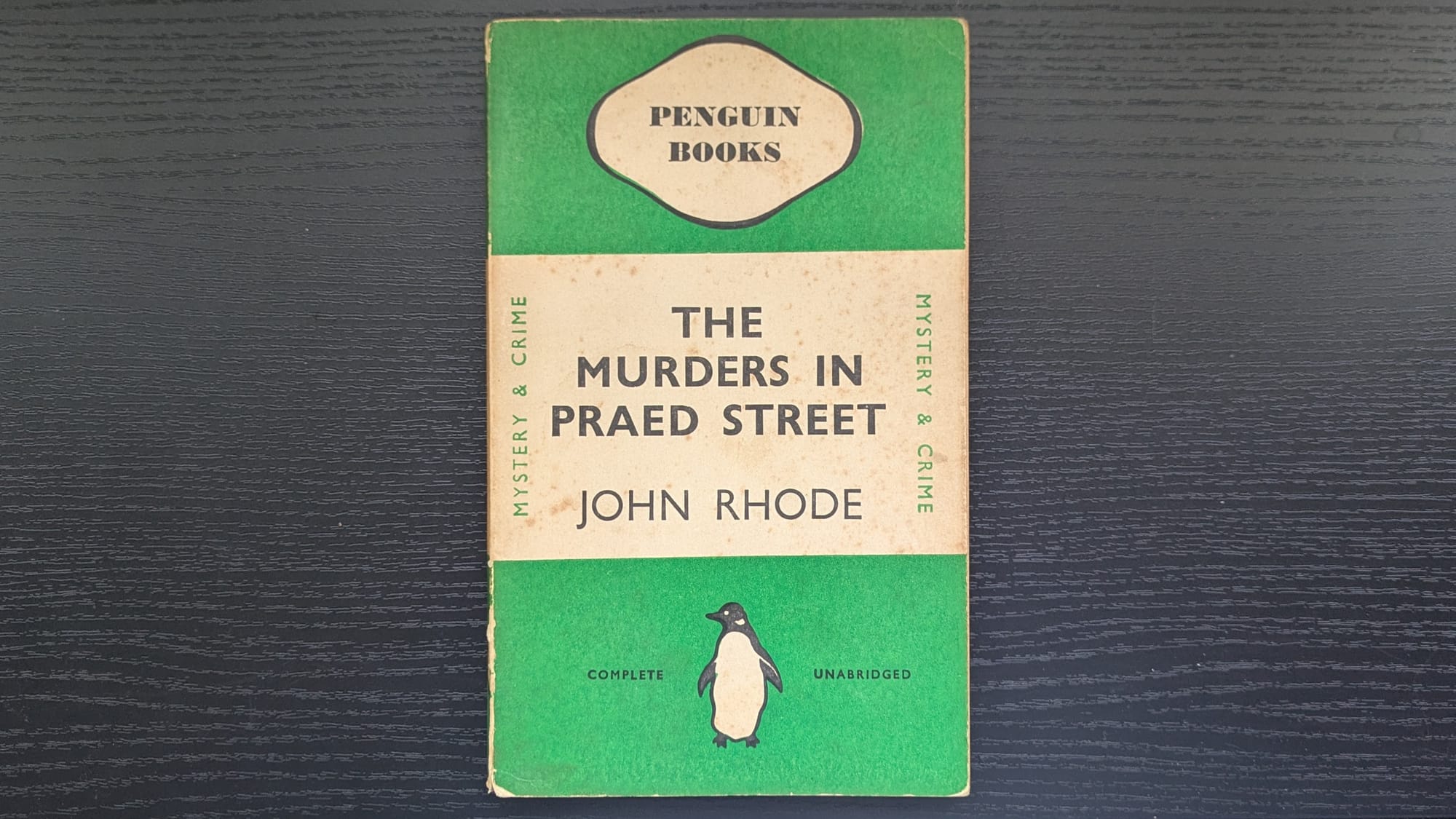
That changed last year, when the Shedunnit Book Club read the first Priestley novel, The Paddington Mystery, together for our annual "Centenary" read that celebrates a book published a hundred years earlier. I wasn't fully enamoured, but there were enough points of interest to make me curious. Then a couple of months ago, I realised that another John Rhode title was coming up in the Green Penguin Book Club schedule: The Murders in Praed Street. Luckily, I knew just who I wanted to discuss it with me — Ronaldo Fagarazzi, writer of the Witness to a Crime blog, and probably the only person I know who has actually read every Cecil Street novel. You can hear our conversation all about Rhode, Priestly, and this enjoyable early serial killer novel now.
Ronaldo and I had a lot to talk about. Street's many books provide a lot of material. There's also a fascinating yet lost film adaptation of The Murders in Praed Street, so we had to cover that as well (since Ronaldo works in film production and is also very knowledgeable about screen adaptations of golden age detective fiction). And there was one topic that we covered in some detail that just wouldn't fit in the final episode, so I decided to move it to the newsletter — after reading this novel, where should we go next in the John Rhode/Miles Burton canon?
Ronaldo had a few recommendations for us. Considerately, he started with two John Rhode options that are relatively affordable and available as secondhand paperbacks.
Both are from 1933, so five years after The Murders in Praed Street. First, he suggests looking out for The Claverton Mystery, which is a poisoning mystery with slightly Gothic overtones, which Ronaldo singles out because of Priestley's relative rare use of psychology to solve the case. And then, from the same year, he also recommends The Venner Crime, which is sort of a sequel to Claverton and likewise deals with a poisoning that is initially suspected to be an accident rather than a murder. Both books were published or republished in mass market editions earlier in the 20th century, so are easier to find than some of the other more limited edition Rhodes.
For the more dedicated book hunter, Ronaldo suggests trying to track down three titles that came out of Street's "purple patch" of top quality fiction at the end of WW2. The brilliantly titled Vegetable Duck from 1944 concerns a poisoned supper of vegetable marrow (my grandmother used to make this dish, and... yuck). The Lake House and Death in Harley Street, both from 1946, are also worth looking out for. The former, I believe, has a courtroom drama element, while the latter, as the title implies, is about the murder of a doctor.
For the Miles Burton series, try 1944's Three Corpse Trick or Death of Mr. Gantley from 1932. Ronaldo also has a soft spot for Death at the Crossroads from 1933, which is a car accident mystery that he says is quite technical and compares favourably to Impact of Evidence by E.C.R. Lorac.
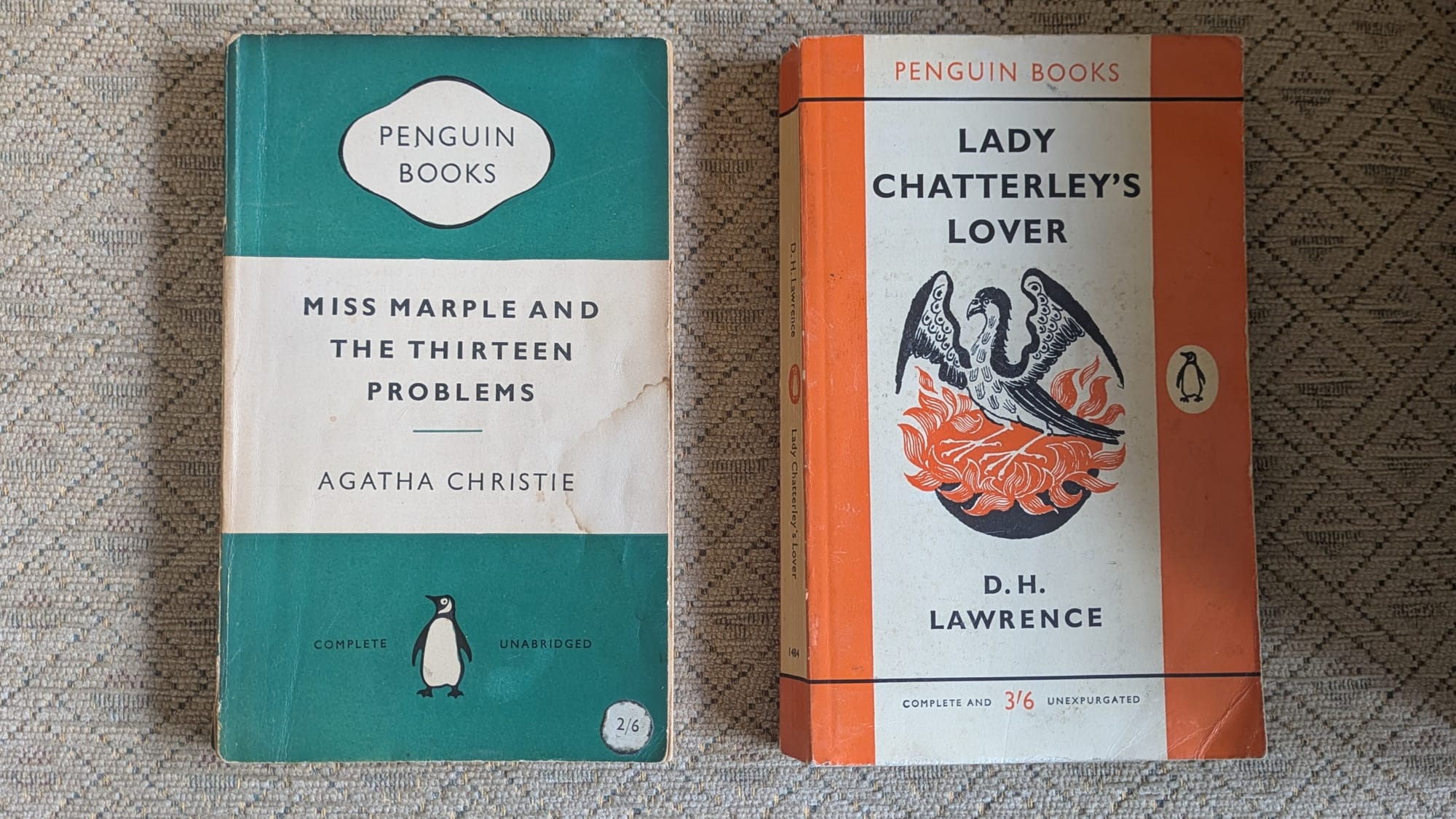
In terms of tracking these titles down, it's often the case with Cecil Street that you have better luck finding digital editions than physical ones. Public domain databases like archive.org sometimes even have versions that can be read for free. Or, you might get lucky and chance across a stray green penguin! If you find a John Rhode or a Miles Burton that you would particularly recommend, do get in touch and let me know. I still feel like I need all the help I can get to sift through his vast output and find the proper gems.
Until next time,
Caroline
You can listen to every episode of Shedunnit at shedunnitshow.com or on all major podcast apps. Selected episodes are available on BBC Sounds. There are also transcripts of all episodes on the website. The podcast is now newsletter-only — we're not updating social media — so if you'd like to spread the word about the show consider forwarding this email to a mystery-loving friend with the addition of a personal recommendation.